Clarity around the buyer’s choices
Organize the home’s plans, design sheets, packages, and selections. Review the agreed choice against the original allowance or cost expectation so the next team knows what changed.

Custom homebuilders
Bring the buyer’s choices, the work you commit to, and the financial record into one connected process. Every custom home has its own scope; your team needs a clear record of what was chosen, approved, and committed.
BUILT INTO THE WORK
Organize the home’s plans, design sheets, packages, and selections. Review the agreed choice against the original allowance or cost expectation so the next team knows what changed.
Manage proposed changes, builder and customer approvals, change-order batches, and contract signatures. A requested option becomes agreed work through the documented review and finalization steps.
Give vendors the quantities, prices, and project details behind the work you expect. Compare takeoff and budget revisions before updating POs; record exceptions through variants and their reasons.
Review budgets, commitments, invoices, and actual costs with the home’s projected margin. Include the costs to build, hold, and sell; keep the buyer’s price distinct from your cost.
WORKING EXAMPLES
Follow a question from problem to decision.
Illustrative walkthroughs · Sample data.
The problem
A different kitchen finish affects the buyer’s price, the purchasing scope, and the home’s expected cost.
ILLUSTRATIVE EXAMPLE
What you do in TK
Record the choice in the home’s design and pricing context. Review pricing and approval, then update the scope and purchasing records for the agreed work.
ILLUSTRATIVE EXAMPLE
What you see
Follow the selection into purchasing, construction context, and job cost. The cost difference remains visible alongside the budget; a commitment is not a payment.
ILLUSTRATIVE EXAMPLE
The decision it supports
Confirm the buyer’s agreement, coordinate the revised work, and review whether the change affects the home’s expected margin.
ILLUSTRATIVE EXAMPLE
THE HANDOFF
Sales and design document the buyer’s choice, price, and approval. Purchasing reviews the revised scope and commitment, construction coordinates the agreed work, and accounting reviews its effect on expected cost and margin. An invoice and a payment remain separate records.
ThreadKore is the platform and system of record. Orbit analyzes the connected operational and financial information to help your team investigate a question.
ACTUAL PRODUCT SCREENS
Images from the supplied ThreadKore training guides. The working example above is illustrative; these are documented product interfaces.
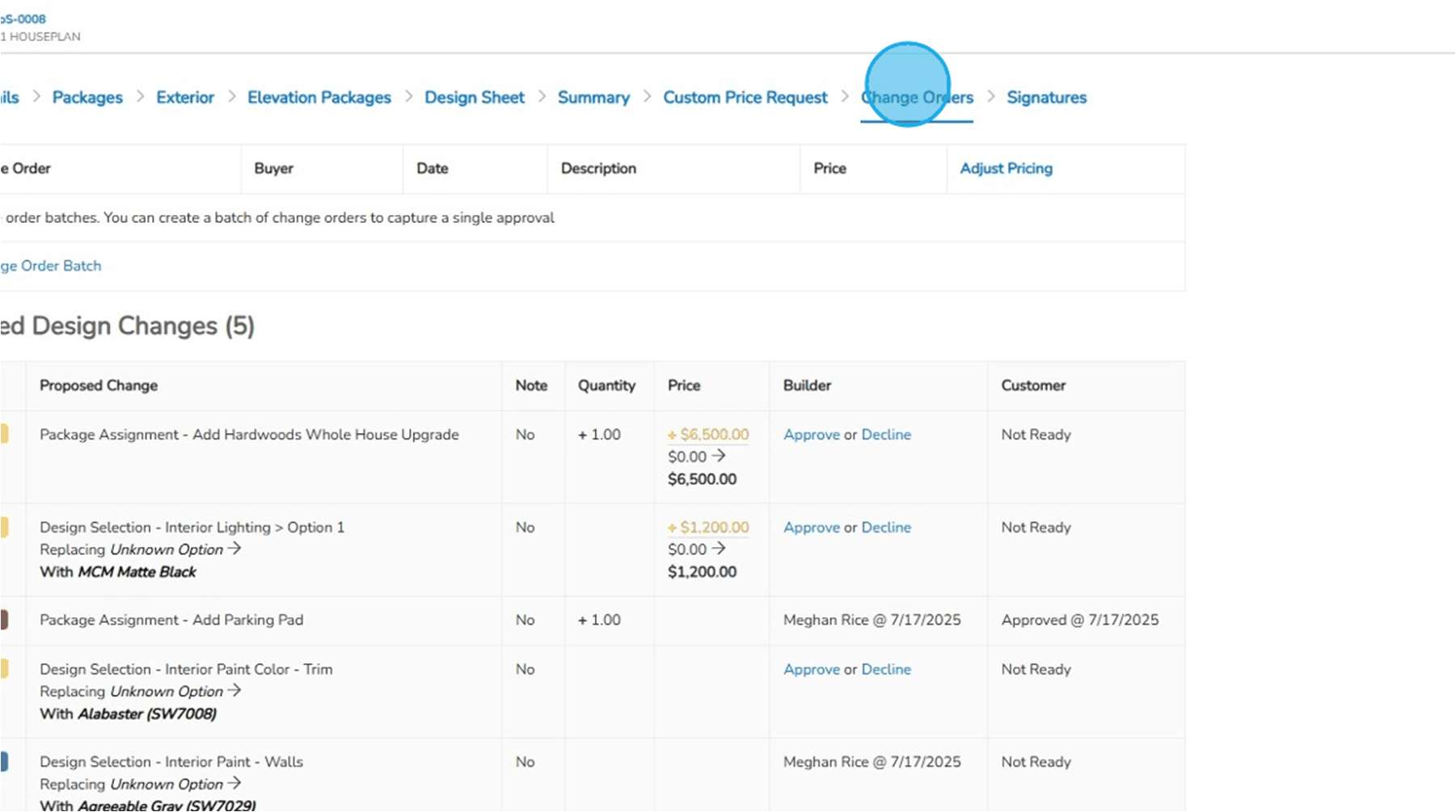
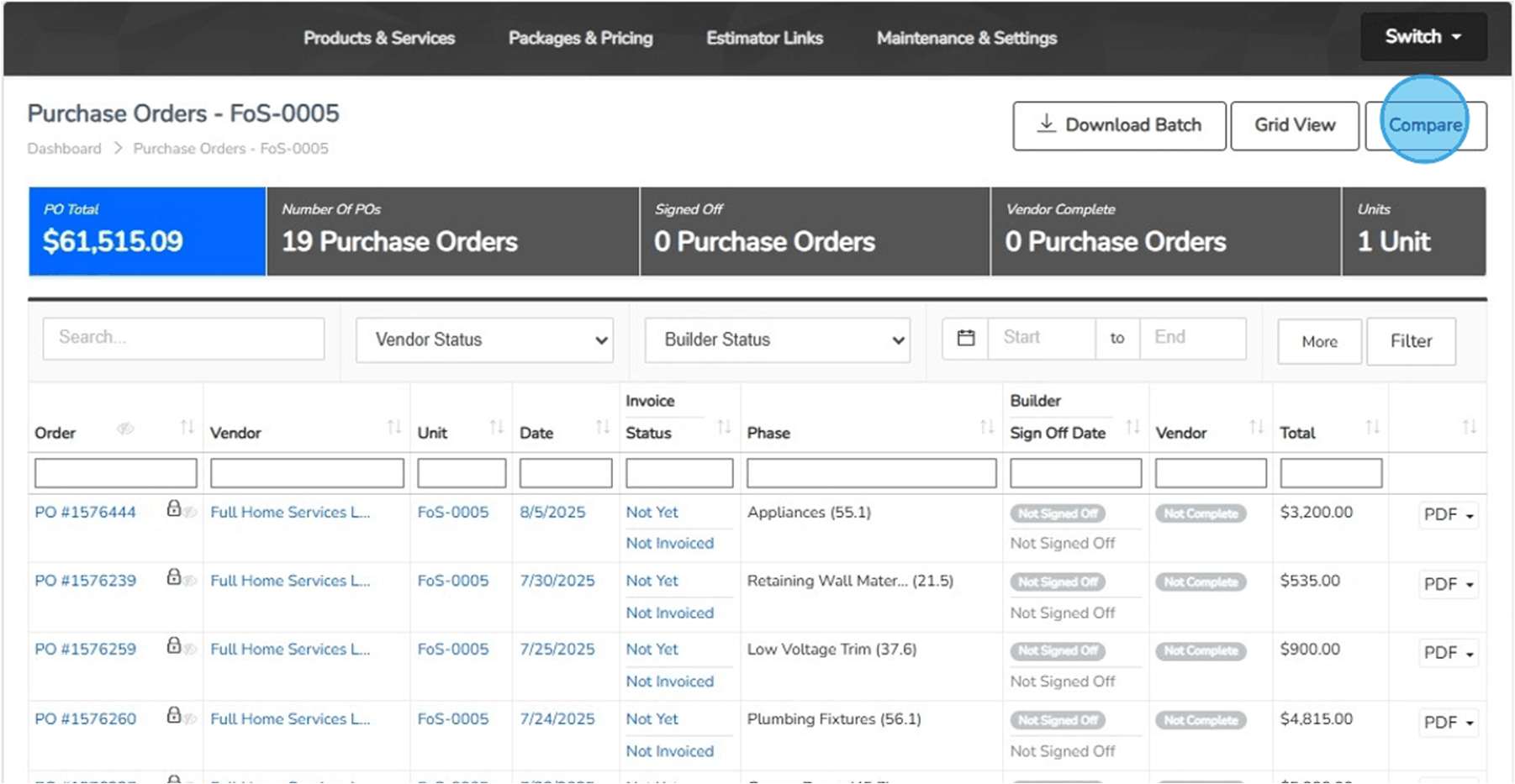
A BUILDER’S PERSPECTIVE
“ThreadKore brought everything into one place and gives us a much clearer picture of what is happening across the company.”
TOOLS FOR YOUR PROCESS
theHOMESapp
Bring Guided Start, plans, design sheets, retail pricing, and signatures together. Document selection changes so the team can follow what was decided and approved.
Explore the workflowDesign Center
Guide buyers through the finishes, options, and packages that make a home their own. Within theHOMESapp, your team can organize design selections, show available option images, review retail pricing, and document approved decisions. Keep those choices with the home so purchasing and construction can work from the agreed scope.
Explore the workflowPurchasing & PO workflows
Import unit takeoffs, compare budgets, and issue purchase orders with job and vendor context. Document exceptions through variant purchase orders, approval levels, reasons, and back charges.
Explore the workflowBuildingBlocks
Review budgets, commitments, invoices, posted accounting entries, and payments in the context of each home. Projected home margin includes the costs to build, hold, and sell. Anticipate cash needs and expected funding using connected construction and financial information.
Explore the workflowYour walkthrough can include sales and selections, purchasing and job budgets, construction coordination, native BuildingBlocks accounting, and Orbit and Orbie.
Explore the full platformStart with the buyer’s request. Follow pricing, approvals and signatures, then purchasing, construction context, and job cost. See where each team records its part of the decision.
Book a tailored demo